- Contact force arises when two surfaces come into contact. This contact force is often resolved into two components:
- The component perpendicular to the surfaces is called the normal contact force N. This force arises because the two surfaces are pressing into each other.
- The component parallel to the surfaces is called friction f. This force arises when two surfaces are sliding, or are tending to slide, relative to each other.

- The direction of friction is always to (try to) prevent the two surfaces to slide relative to each other.
- Sometimes friction retards motion.
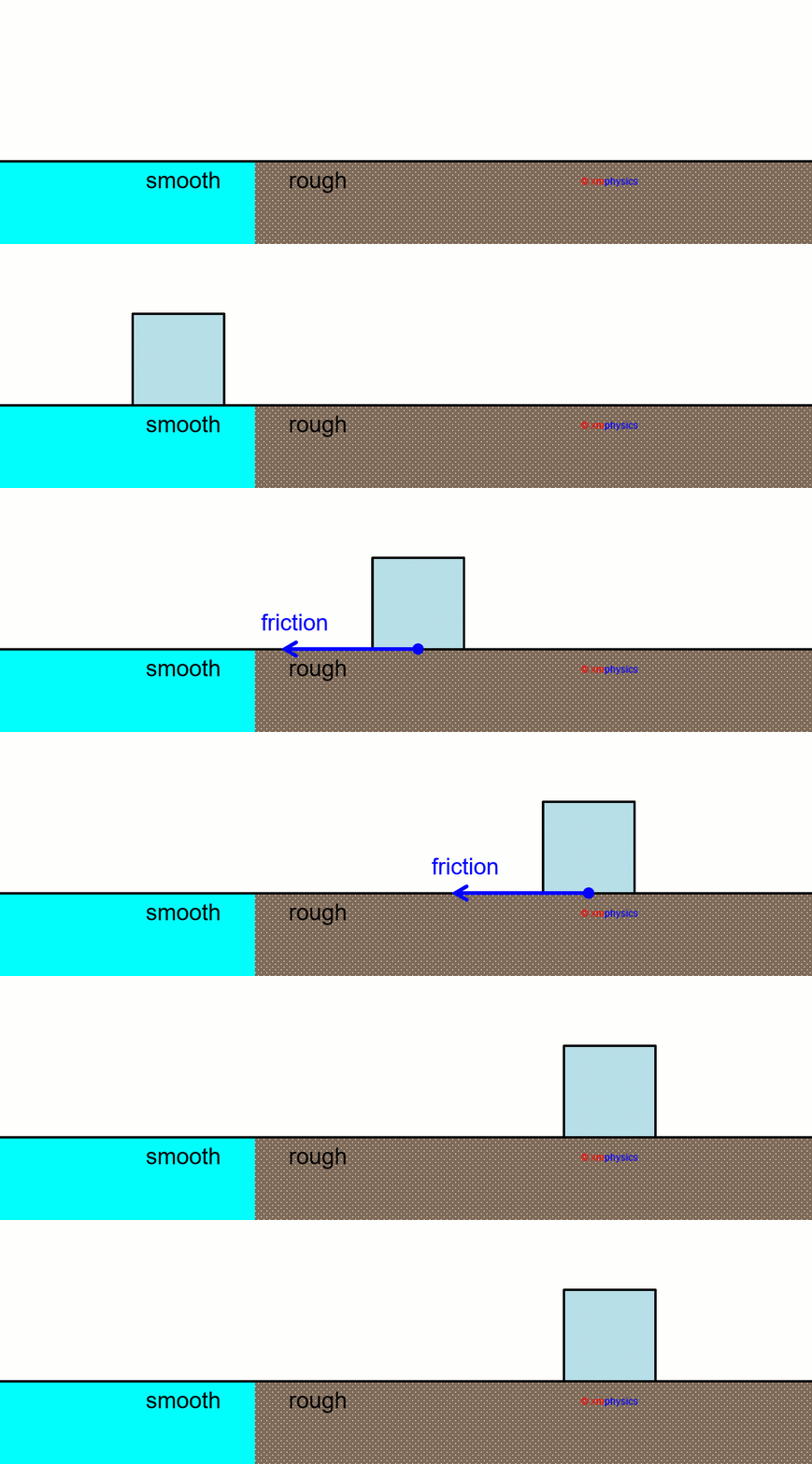
- Sometimes friction produces motion

- The frictional force between two particular surfaces depends only on (1) the normal contact force N (relating to how hard the two surfaces are pressed together) and (2) the coefficient of friction μ (relating to how “sticky” the two surfaces are to each other).
-
f = μN
–
- The frictional force between two stationary surfaces is called the static friction, fs.
- The frictional force between two sliding surfaces is called the kinetic friction, fk.
- It can be shown empirically that between two particular surfaces
- static friction fs ranges from zero to a maximum value.
0 < fs < μsN
-
- kinetic friction fk is constant and independent of speed.
fk = μkN
-
- maximum static friction is larger than kinetic friction.
–
This video shows clearly how the static friction increases until reaching its maximum value, then drops to the constant kinetic friction.
–
Unlike drag force, friction is unaffected by the sliding speed. It is also unaffected by the area of the surfaces in contact. All that matters is the material of the two surfaces and how hard they are pressed against each other.
 xmPhysics