Anything that causes a measurement to deviate from its true value is called an error. We make a distinction between two types of errors: random and systematic.
Random Errors
Random errors are, well, random. They are thus unpredictable, inconsistent and difficult to reproduce. Because random errors keep changing in sign and magnitude, they show up as fluctuations in readings, and scatter in graphs.
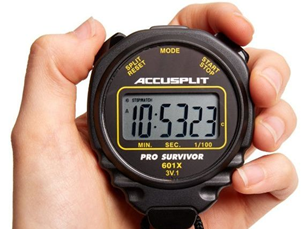
Examples of random errors include
- Resolution of measuring devices
- requiring readings to be sometimes rounded up and other times rounded down to the nearest scale marking.
- Human reaction time
- because the experimenter’s reaction time fluctuates.
- Parallax error
- e.g. when the experimenter reads the meniscus sometimes from above, sometimes from below eye level.
- Poorly controlled control variables
- e.g. projectiles launched sometimes faster, sometimes slower than the intended constant speed.
- Fluctuations in environmental conditions
- e.g. thermal noise when measuring electrical circuits.
- e.g. tiny air currents when using weighing scales.
Since random errors are equally likely to be positive and negative, repeating measurements and taking the average value is the standard procedure to manage random errors. During averaging, chances are good that some positive errors will cancel out some negative errors. So the averaged value is likely to be close to the true value.
Systematic Errors
Systematic errors are, ahem, systematic. They are therefore predictable, consistent, and reproducible. Since systematic errors are fixed in both sign and magnitude, they do not show up as fluctuations in readings nor scatter in graphs.

Example of systematic errors include
- Miscalibration of measuring instruments
- e.g. zero error
- Human reaction time
- e.g. in situations where the experimenter’s reaction time is incurred only when stopping the stop watch. For example, when measuring the time taken for a ball to fall to the ground, the stop watch is started same time as the ball is dropped (assisted by a “3-2-1-go” countdown perhaps) but stopped only a split second after seeing the ball lands.
- Parallax error
- e.g. in situations where the experimenter always reads with his eyes above the meniscus
- Poorly controlled control variables
- e.g. projectiles launched at speeds which are always slower than the intended speed.
- Human mistakes
- e.g. using
instead of
for calculations.
- e.g. measuring only the length of pendulum string without including the length to the C.G. of the pendulum bob.
- e.g. using
Systematic errors cause a consistent deviation from the true values. So repeating measurements and averaging the readings does not help overcome systematic errors. On graphs, they do not show up as scatter. Instead, they may cause the best-fit-line to shift, or changes the trend of the data. To overcome systematic errors, we must first identify the cause of the systematic error, and then take appropriate corrective action to eliminate it. For example, after realizing that there is a zero error in your micrometer screw gauge, you can eliminate the error simply by recalibrating your MSG properly, or make appropriate adjustments to your readings.
–
 xmPhysics