Category: 04 Forces

Laws of Friction

  • Contact force arises when two surfaces come into contact. This contact force is often resolved into two components:
    • The component perpendicular to the surfaces is called the normal contact force N. This force arises because the two surfaces are pressing into each other.
    • The component parallel to the surfaces is called friction f. This force arises when two surfaces are sliding, or are tending to slide, relative to each other.

contact force.gif

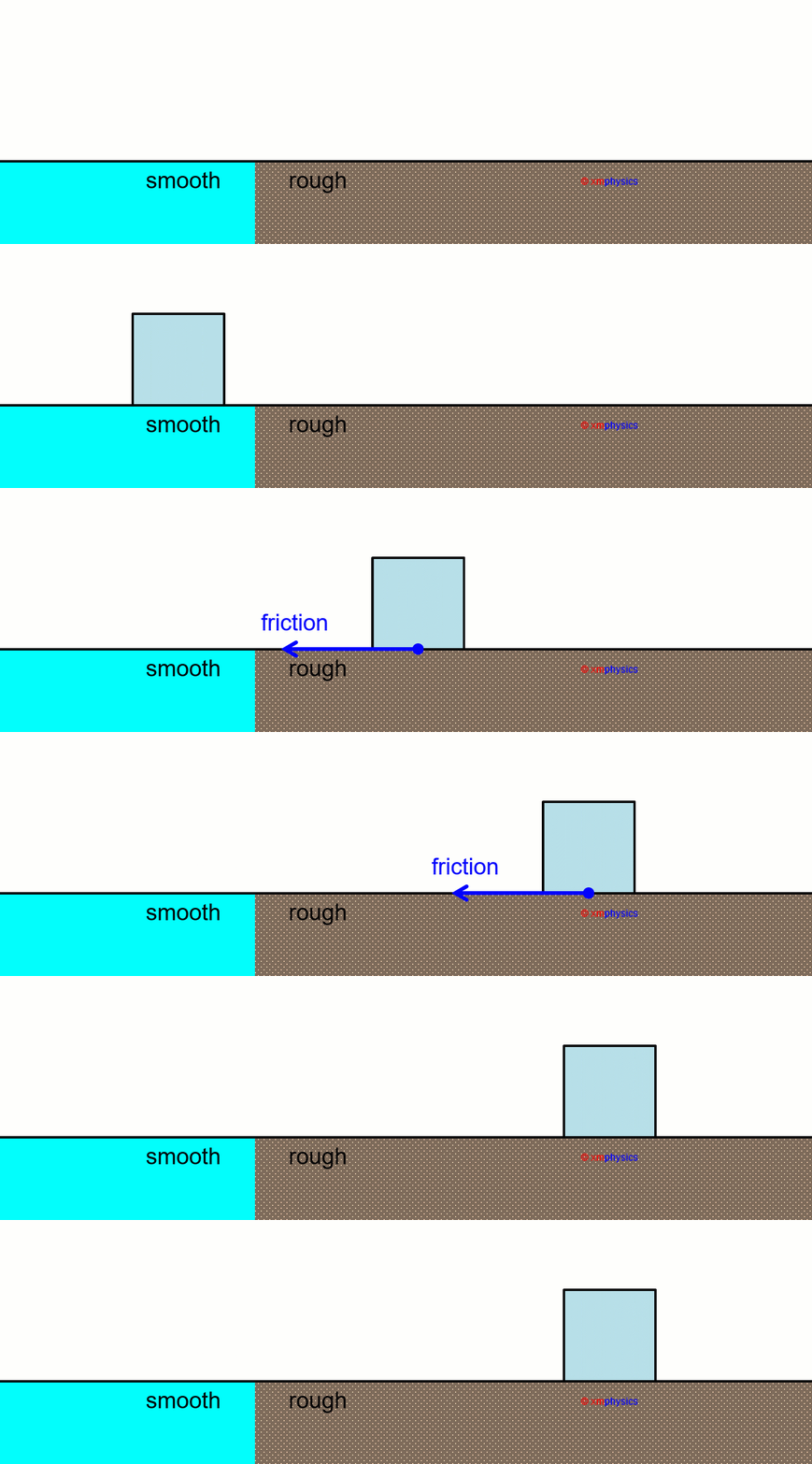
  • The direction of friction is always to (try to) prevent the two surfaces to slide relative to each other.
  • Sometimes friction retards motion.

relativeMotion1

  • Sometimes friction produces motion

relativeMotion2

  • The frictional force between two particular surfaces depends only on (1) the normal contact force N (relating to how hard the two surfaces are pressed together) and (2) the coefficient of friction μ (relating to how “sticky” the two surfaces are to each other).
  • = μN

  • The frictional force between two stationary surfaces is called the static friction,  fs.
  • The frictional force between two sliding surfaces is called the kinetic friction, fk.
  • It can be shown empirically that between two particular surfaces
    • static friction fs ranges from zero to a maximum value.

0 < fs < μsN

    • kinetic friction fk is constant and independent of speed.

fk = μkN 

    • maximum static friction is larger than kinetic friction.

This video shows clearly how the static friction increases until reaching its maximum value, then drops to the constant kinetic friction.

Unlike drag force, friction is unaffected by the sliding speed. It is also unaffected by the area of the surfaces in contact. All that matters is the material of the two surfaces and how hard they are pressed against each other.

Friction Upsized

The friction between two pages is quite weak. So how did friction grow to be so incredibly strong in this demonstration? 2 reasons:

(1)

When we interleave N pages on one side with N+1 pages on the other side, each side now experiences a total of 2N frictions.

(2)

Remember also that friction depends on how hard the two surfaces are pressed perpendicularly into each other. Consider the bottom page: it is now weighed down by 2N pages instead of just one. The next bottom-most page is weighed down by 2N-1 pages. And so on until the top page where the normal contact force is back to the weight of one single page.

So the total friction is multiplied by (1+2+…2N). The sum of this arithmetic progression is about 2N2.

It takes just over 30 pages on each side to amplify the friction by about 2000 times!

Vertical Friction

https://youtu.be/fCbc_SRUktM&rel=0

This video highlights the fact that the friction between two surfaces increases if the two surfaces are pressed more strongly into each other. (f=μN)

capture

For example, the grip that the stick exerts on the beans (f) is large only if stick is wedged tightly among the beans (leading to large N).

capture

Same thing for the paper. Only if the paper is pressed hard horizontally against the stick will the vertical friction be large enough.

capture

When we “pin” papers on the fridge using fridge magnets, it is not the magnetic force that holds the papers in position. In fact, the magnetic forces do not even act on the papers. What the magnets do is to ensure a large normal contact force , which then allows for a large friction.

Lastly, note that in all the examples in this video, friction was the force that resulted in motion. It is a common misconception that force opposes motion. This is wrong. Friction opposes relative motion between two surfaces, not motion per se.